
How Is Cleanroom Cleanliness Measured? Understanding Standards, Airflow, and the Role of FFUs
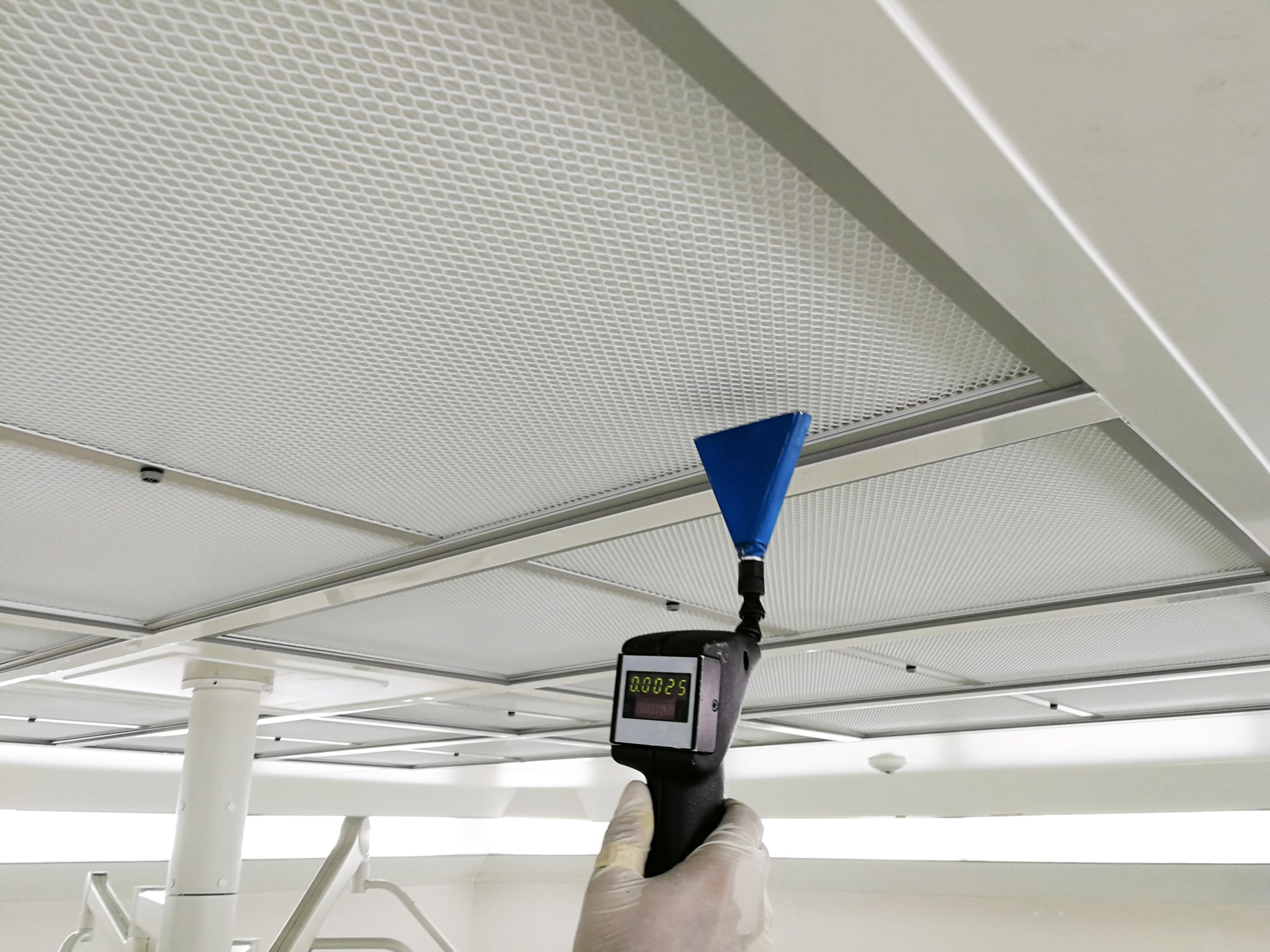
One of the most common questions for organizations investing in controlled environments is: How is cleanroom cleanliness measured? Whether you’re designing a cleanroom for pharmaceutical production, semiconductor fabrication, or academic research, maintaining precise levels of cleanliness is essential. This guide explains the standards behind cleanroom classifications, the role of fan filter units (FFUs), and how Technical Air Products helps meet stringent ISO requirements.
What Does Cleanroom “Cleanliness” Really Mean?
A cleanroom is a controlled environment that limits the number of airborne particles to meet specific cleanliness levels. These airborne contaminants may include:
- Dust
- Aerosols
- Pollen
- Microbes
- Other particulate matter
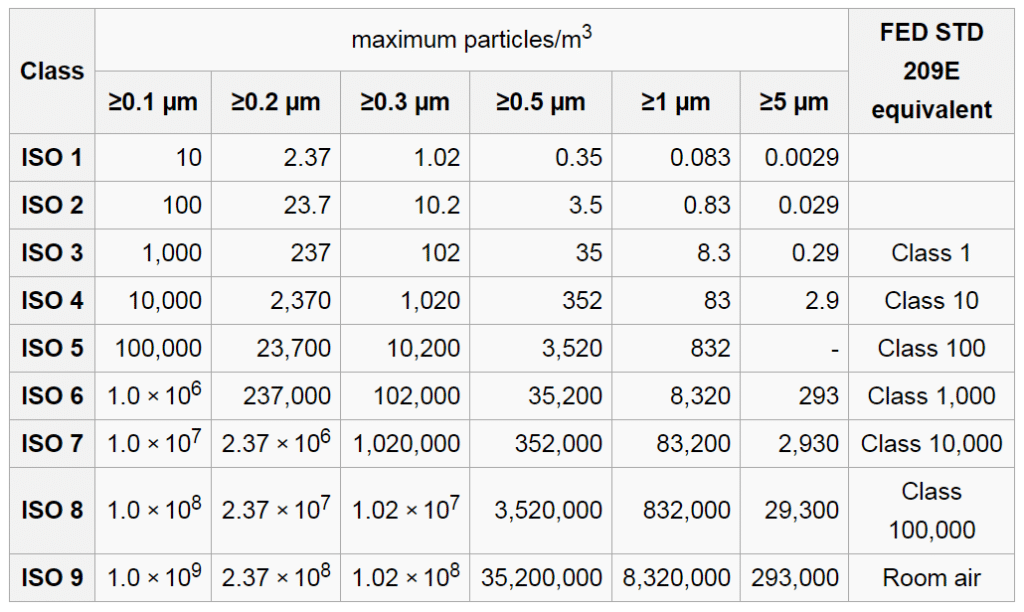
The concentration of these particles is what defines the cleanroom classification, which is measured according to ISO standards. Cleanrooms are classified from ISO Class 1 (ultra-clean) to ISO Class 9 (least strict) based on how many particles of a given size are allowed per cubic meter of air.
For example:
- ISO 5 cleanroom allows no more than 3,520 particles ≥0.5 microns per cubic meter.
- ISO 8 cleanroom allows up to 3,520,000 particles ≥0.5 microns per cubic meter.
How Is Cleanroom Cleanliness Measured?
Particle counting determines cleanroom cleanliness, typically using handheld or installed particle counters that measure particle concentration at different locations and times. These readings confirm whether the cleanroom meets its required ISO class.
To ensure reliable performance, these tests are often conducted:
- After installation
- During regular operation
- Post-maintenance or repairs
In addition to particle counts, other environmental factors such as air change rate, airflow patterns, pressure differentials, and filter performance are regularly monitored to maintain compliance.
How Fan Filter Units Help Maintain Cleanroom Standards
Fan filter units (FFUs) are the workhorses of modular cleanroom systems. Each FFU contains a motorized fan and high-efficiency filter (either HEPA or ULPA) that continuously removes contaminants from the air.
- HEPA filters are 99.99% efficient at capturing particles ≥0.3 microns.
- ULPA filters are 99.999% efficient at capturing particles ≥0.1 microns.
FFUs draw air through prefilters and force it through the main HEPA or ULPA filter, delivering clean, uniform airflow at 90–100 feet per minute (FPM). This helps maintain laminar airflow, minimizing turbulence and reducing particle accumulation.
The result is clean, consistent airflow that pushes contaminants downward and out of the room, keeping your cleanroom in compliance.
Cleanroom Zones and Their Cleanliness Needs
Not all areas of a cleanroom require the same level of cleanliness. For example:
- Gowning rooms may be ISO 8
- Critical production zones may require ISO 5 or ISO 6
- Storage or support areas can meet less strict classifications
Design your modular cleanroom with these zoning needs in mind, and adjust your FFU placement accordingly to deliver targeted air cleanliness.
Why Choose a Modular Cleanroom for Cleanliness Control?
Modular cleanrooms offer superior flexibility and scalability for maintaining and upgrading cleanliness standards. With softwall and rigidwall modular cleanrooms from Technical Air Products, you benefit from:
- Rapid installation and testing
- Expandable configurations
- Easy access for cleaning and maintenance
- Compatibility with ISO 4–8 cleanroom classifications
- Optional roomside replaceable FFUs (RSR/RSRE) for simplified filter servicing
Cleanroom Cleanliness Requires Engineering and Precision
When asking how is cleanroom cleanliness measured, the answer is part science, part engineering. Between carefully controlled airflow, high-efficiency filters, proper zone design, and particle count validation, maintaining compliance with ISO standards takes expert planning and reliable equipment.
At Technical Air Products, we manufacture modular cleanrooms and precision-engineered FFUs to help your organization meet current standards—and prepare for future ones.
Leave a Reply