
The Role of Anterooms in Maintaining ISO Compliance
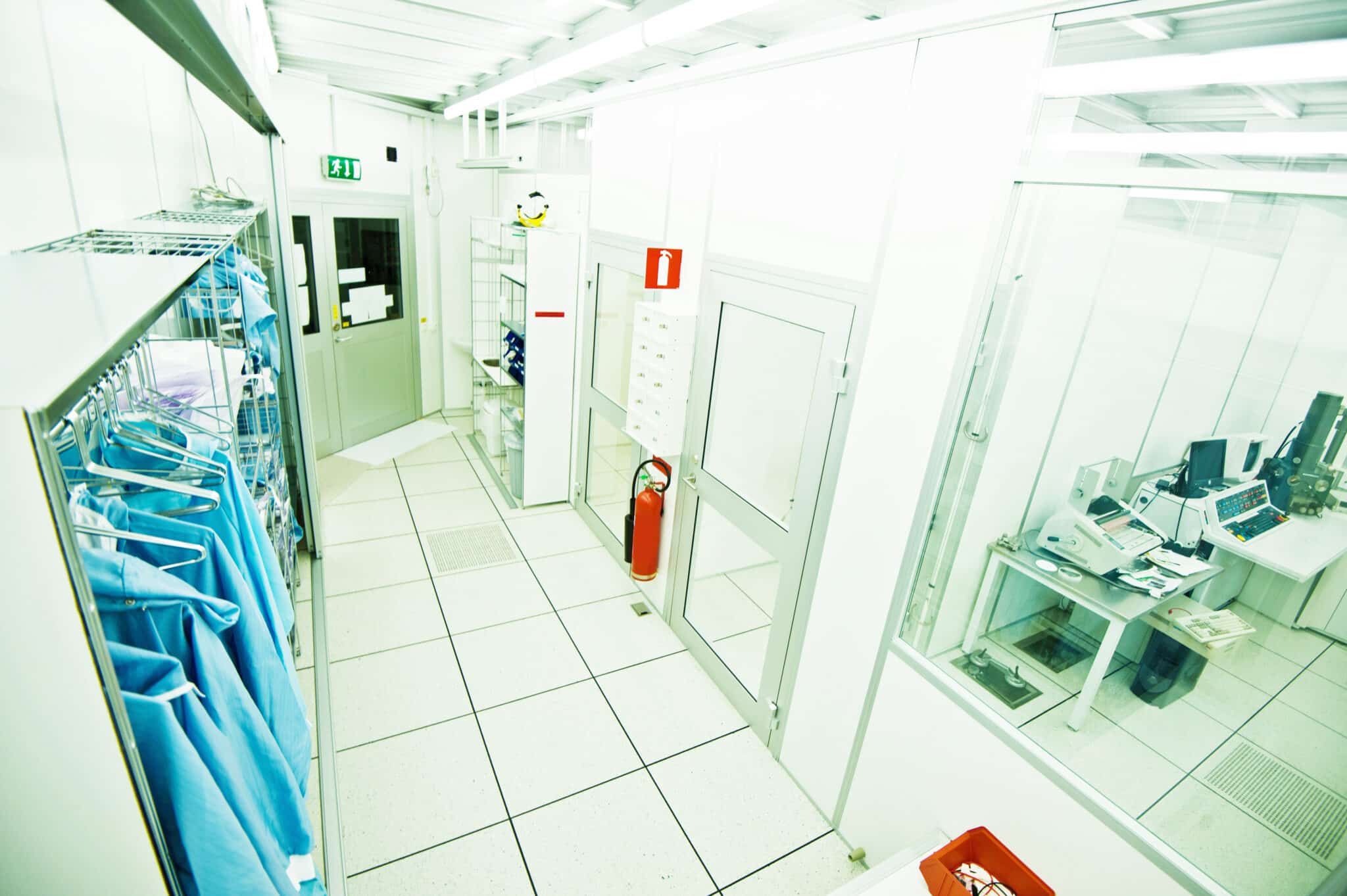
Maintaining ISO compliance in cleanrooms isn’t just about the main workspace, it’s also about what surrounds it. An often-overlooked component of cleanroom design is the anteroom, a transitional space that plays a critical role in upholding ISO cleanroom classifications. Whether you’re working within ISO 5, 6, 7, or 8 specifications, understanding the function and design of anterooms is essential for contamination control and operational efficiency.
What Is an Anteroom?
An anteroom, commonly referred to as an “airlock”, is a buffer zone located between a classified cleanroom and adjacent, less-controlled spaces. This small area serves several functions within the greater cleanroom environment, including:
- Contamination control
- Personnel and material flow control
- Air pressure differential management
- Environmental stability
Anterooms are necessary and critical zones within cleanrooms classified as ISO 7 or cleaner, as well as USP <797>/<800> and aseptic processing. These ratings are commonly found in industries following FDA and cGMP guidance, including but not limited to pharmaceutical and biotech manufacturing, compounding pharmacy, microelectronics, and aerospace.
Anterooms serve as the first line of defense in these manufacturing and processing spaces. By reducing the flow of contaminants like dust, bacteria, and particles into the cleanroom environment.
How Anterooms Support ISO Cleanroom Classifications
ISO standards define cleanroom classifications based on the allowable concentration of airborne particles per cubic meter of air. For example: ISO 8 cleanrooms allow up to 3,520,000 particles ≥0.5 µm per cubic meter, while ISO 5 cleanrooms allow just 3,520 particles of the same size.
When a door is opened directly between an ISO-rated cleanroom and an uncontrolled area, the pressure and airflow disruption can introduce a flood of particles, making compliance nearly impossible to maintain, particularly in cleanrooms with stricter classifications.
Anterooms solve this problem by:
- Acting as airlocks that reduce pressure drops and limit airflow disturbances.
- Maintaining directional airflow (positive or negative) depending on the classification and application.
- Providing a space for gowning or degowning, minimizing particulate transfer.
- Housing FFUs (Fan Filter Units) to filter incoming air, especially for more stringent ISO classifications.
Pressure Balancing and FFUs in Anterooms
In many modular cleanroom designs, Technical Air Products uses motorized HEPA FFUs, and for customer flexibility, we offer roomside replaceable options for easy maintenance. These fan filter units can also be installed in anteroom ceilings to maintain ISO-compliant airflow levels.
For example:
- In a positive pressure cleanroom, anterooms help maintain a higher pressure than adjacent rooms, pushing air out to prevent contamination from flowing inward.
- In a negative pressure cleanroom (like those used for hazardous materials or infectious agents), anterooms act as containment buffers, preventing contaminants from escaping into cleaner areas.
Anteroom Applications
Anterooms play a crucial role across a wide range of cleanroom environments and industries. While often required by certain regulatory bodies, their inclusion is also a strategic design decision that improves long-term performance, safety, and compliance.
Pharmaceutical and Biotech Manufacturing
In facilities governed by ISO, FDA, and USP standards, such as compounding pharmacies or pharmaceutical manufacturing labs, anterooms are not optional—they’re required. They serve as transition spaces between general areas and sterile compounding environments, allowing for proper gowning and degowning procedures, controlling contamination risks, and maintaining required pressure differentials between clean zones.
Healthcare and Hospital Isolation Rooms
Anterooms are widely used in hospitals for negative pressure isolation rooms designed to contain airborne pathogens. These rooms rely on the anteroom to act as a pressure buffer, ensuring that contaminated air does not escape into surrounding hallways or adjacent rooms. In this context, anterooms help protect both patients and staff by containing infectious agents.
Microelectronics and Semiconductor Industries
For ISO 5–7 cleanrooms used in semiconductor or electronics manufacturing, even microscopic contaminants can ruin a product. Anterooms help preserve cleanroom integrity by allowing materials and personnel to transition in a controlled air environment, limiting the introduction of particles and maintaining required ISO cleanliness levels.
Aerospace and Optics Manufacturing
Precision manufacturing environments like aerospace, satellite assembly, or optical fabrication often integrate anterooms as staging areas. Here, technicians perform gowning, equipment checks, and cleanliness inspections before entering the primary cleanroom. Anterooms also help control humidity and temperature differences between controlled and uncontrolled spaces, which is especially important when working with sensitive materials.
Research Labs and University Cleanrooms
In university or government research facilities, anterooms may be used to maintain compliance with grant-funded cleanroom usage guidelines. These spaces often have multiple classifications and research types occurring simultaneously, and anterooms help protect cross-contamination between labs while allowing for clear workflow separation.
When Is an Anteroom Required?
ISO standards don’t specifically mandate anterooms but strongly imply their use; however, USP <797> and <800> guidelines reflect strict anteroom standards. While not always mandated by application-specific cleanroom standards, anterooms are frequently incorporated into designs to support ISO Classification requirements and to reduce contamination risks associated with high personnel or material traffic.
Anterooms are often required if:
- You are targeting ISO 7 or ISO 8 classification and have frequent personnel movement.
- You need to comply with USP <797> sterile compounding or USP <800> hazardous drug handling.
- Your operations require gowning/decontamination procedures outside the cleanroom envelope.
- You want to improve energy efficiency by minimizing direct airflow between temperature-controlled zones.
Anterooms may seem like a small detail in overall cleanroom design, but they serve a vital function in supporting ISO compliance. By providing a controlled buffer zone between classified and unclassified spaces, anterooms help regulate airflow, maintain pressure differentials, and reduce contamination risks. When equipped with fan filter units, anterooms can significantly improve cleanroom performance and cleanliness.
Incorporating an anteroom into your cleanroom layout demonstrates a commitment to best practices, staff safety, and regulatory compliance. Even in applications where they’re not required, anterooms add an extra layer of protection and operational efficiency that is beneficial.
Leave a Reply