
Cleanroom Design: Key Considerations for Best Performance
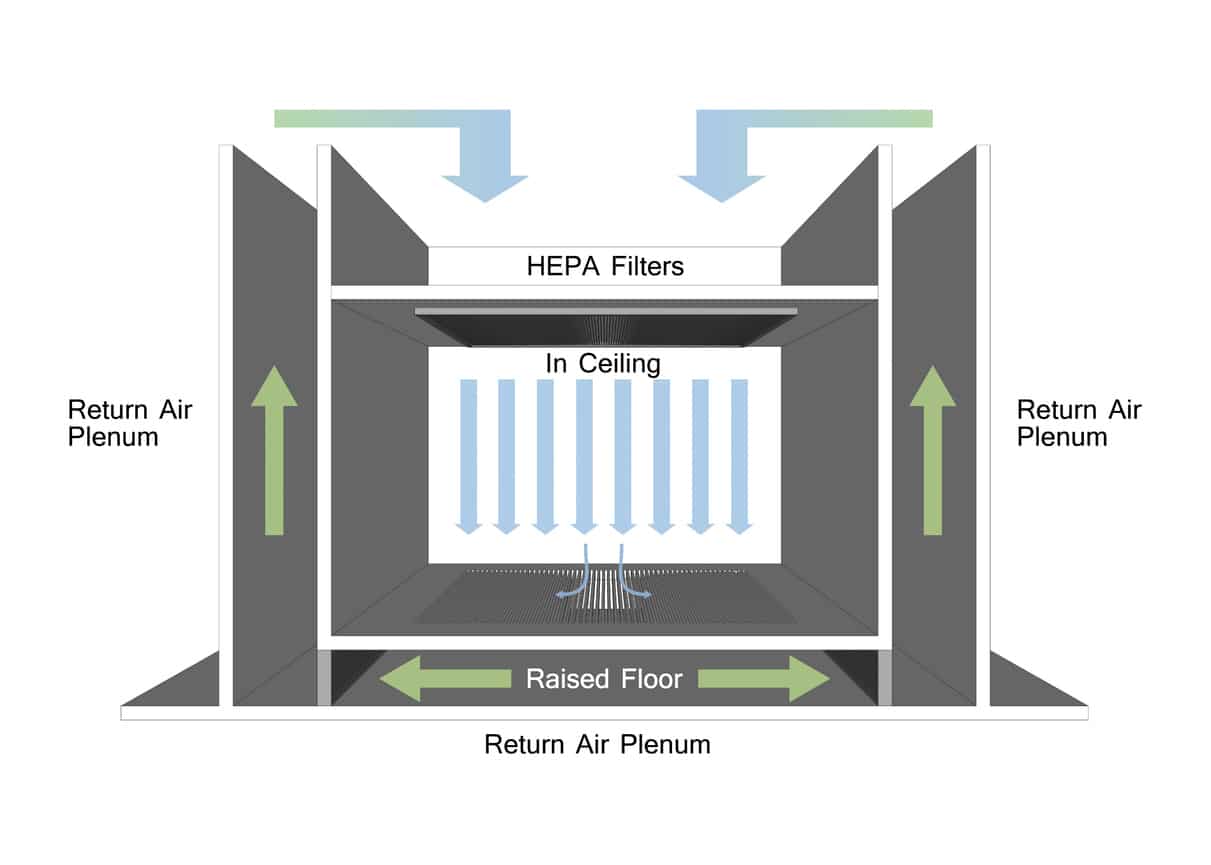
If you are planning to add a new cleanroom to your facility, there are a number of decisions you should make about its design before you invest any of your resources. If you’re not certain where to start, Technical Air Products can help. In this blog we will go over four key decisions you need to factor into your cleanroom design in order to ensure its best performance.
Key Considerations for Cleanroom Design
Designing a cleanroom that will perform optimally requires careful planning, attention to detail, and a deep understanding of the specific requirements of your industry and processes. Before you decide on any specific cleanroom design you should know:
Your Budget
Making any addition or improvement to your facility requires resources, and you should know before you buy what yours are. Determining your budget and sticking to it will lessen the stress of the process and help you focus on what is most important.
Which factors affect the price of a cleanroom the most?
- Size – The larger the square footage, the higher the cost.
- Type – Hardwall cleanrooms will typically cost more than Rigidwall or Softwall cleanrooms, to both build and maintain.
- Classification – The more stringent your cleanliness needs, the more your cleanroom will cost in equipment, room components, and energy costs.
- Design Complexity – Adding additional features like anterooms, gowning rooms, or options to control static, humidity, or sound will increase the price of the room.
Your cleanroom manufacturer should have a good understanding of these factors and how they can best accommodate your unique cleanliness specifications.
Your ISO Classification
You will need to determine the cleanroom classification you need based on your industry standards (e.g., ISO 14644-1) and/or the sensitivity of your processes. This will require you to define key parameters for your cleanroom, such as particle count, air change rates per hour, temperature, humidity, and pressure differentials based on your industry requirements.
The more stringent your ISO classification is, the more your cleanroom costs will be, so determine the lowest possible cleanroom classification that still meets your application’s requirements and build/install accordingly.
Your Process Flow
Before you build or install, you should know how the room will be set up and how the people in it will enter, exit, and move around within it. You will need to make decisions about what equipment to include, what your work surfaces will be, and how your filtration system will operate.
It’s helpful to create a drawing of the cleanroom and all of its contents. From there, determine the best flow of materials, personnel, and processes within the cleanroom with a focus on minimizing contamination. Once you have done this, you can select a suitable location for the cleanroom within your facility, considering factors like its proximity to existing facilities, ease of access, and environmental conditions.
Other design considerations include:
Material Selection – Utilize construction materials that are smooth, non-porous, and resistant to contamination, and minimize the use of materials that emit particles or gases. All materials in the cleanroom should be compatible with cleaning agents and disinfectants.
Lighting – Choose lighting fixtures that are easy to clean and maintain, while providing enough illumination for workers to complete their tasks. They should not produce excessive heat or particles.
HVAC System Design – Design the heating, ventilation, and air conditioning (HVAC) system to meet the specific requirements of your cleanroom classification.
Flexibility and Future Expansion – Will your organization need to expand production at some future point? Plan for the possibility of future expansion by leaving space for additional workstations or equipment.
Regulatory Compliance – You will need to ensure that your cleanroom design complies with relevant industry standards and regulations. Collaborating with experienced cleanroom experts will help you achieve your cleanroom goals.
Modular Cleanrooms Are Flexible and Affordable
Many organizations ultimately choose modular cleanrooms over hardwall or stick-built cleanrooms because they perform like traditional cleanrooms for most applications, but they are more affordable, faster and easier to install, and can be easily updated or expanded if the needs of the organization change. They are backward compatible, meaning that they can be expanded, minimized, or reconfigured as necessary. They are simple to disassemble and reassemble. For this and other reasons, modular cleanrooms are a great long-term investment.
Consult the Experts at Technical Air Products
If you’re looking to design a cleanroom or you need to redesign the one you already have, our design engineers are available to assist. We can help you with your planning and decision making to ensure that the cleanroom you build or install will be perfect for your application. Contact us for more information or request a quote.
Leave a Reply